
LE-UWBTM Benefits
The wireless architecture engineered for real-time intelligent systems.

Engineered Beyond Conventional Trade-Offs
Ultra-Low Latency
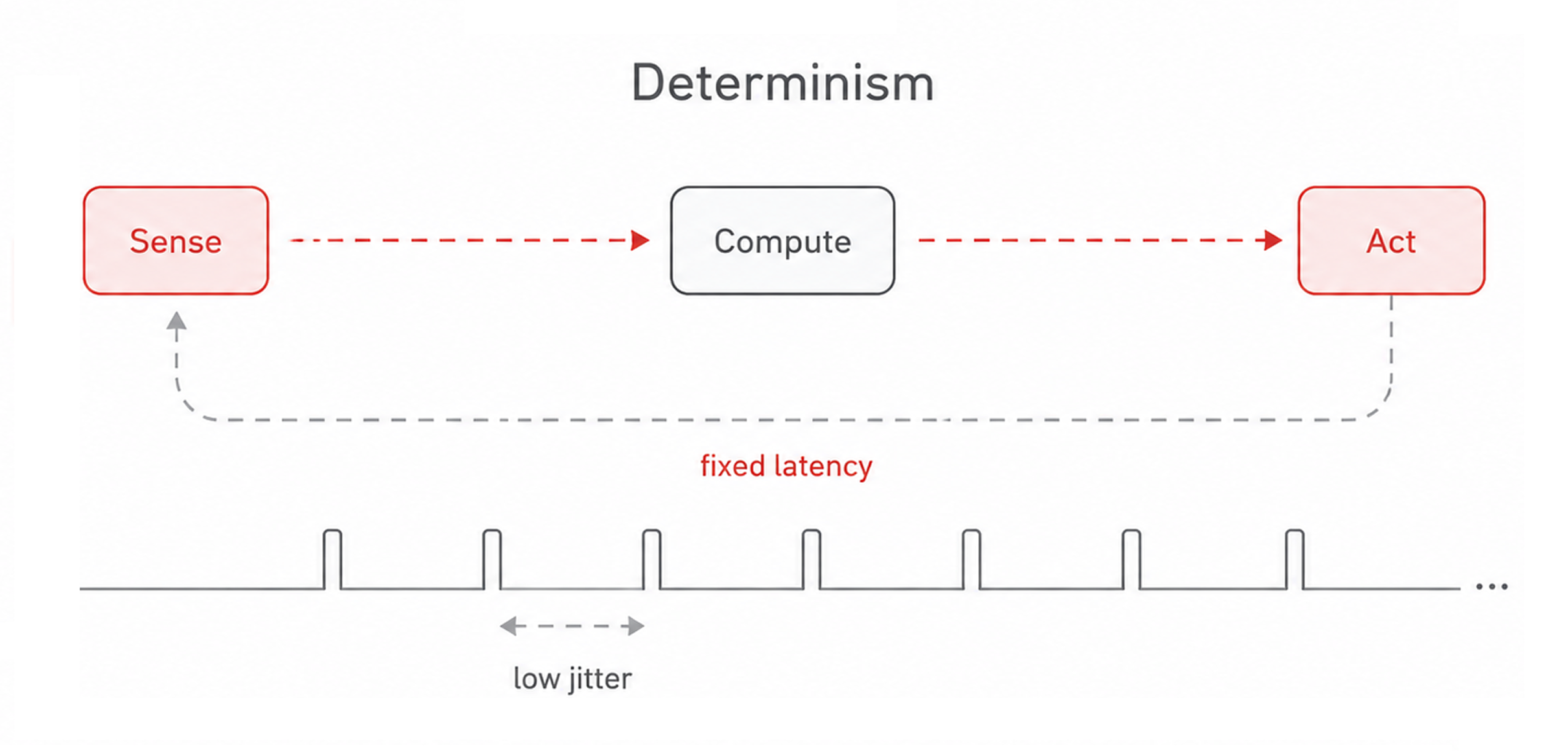
LE-UWB™ achieves very low latency through the timing characteristics of impulse radio. Each pulse lasts 5 nanoseconds or less, allowing data to be transmitted over extremely short time intervals.
In narrowband systems, the carrier must be modulated more slowly to keep the transmitted signal within its assigned bandwidth. Because faster modulation broadens the signal in the frequency domain, narrowband architectures face inherent limits on how quickly data can be transmitted.
They also require a stable carrier to be established before the receiver can lock onto the signal. LE-UWB™ does not require this carrier-establishment step, allowing data transmission to begin immediately.
The result is fast link initialization and very low data latency.
Ultra-Low Power
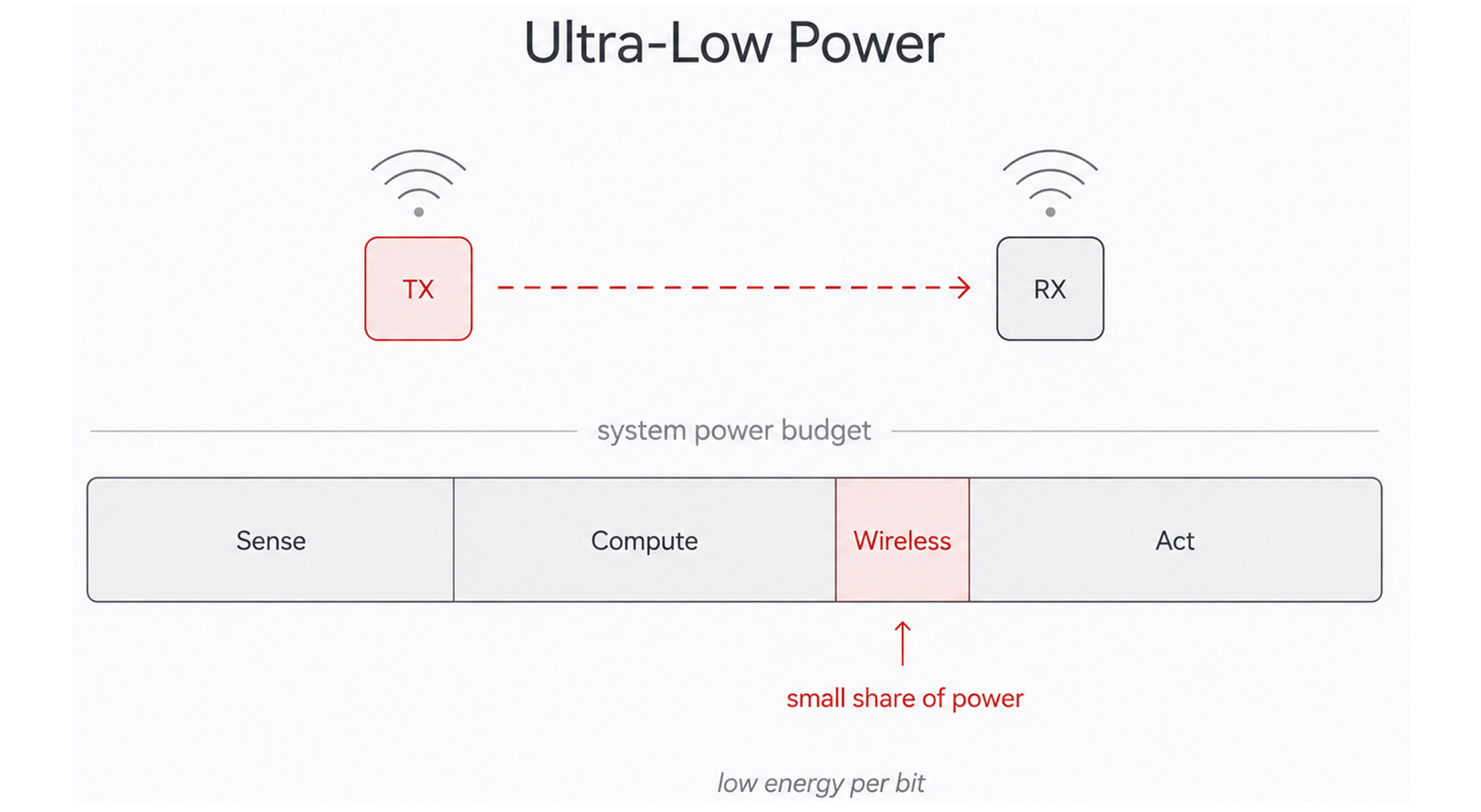
UWB operates at very low spectral output power, while its impulse-radio architecture transmits information in short bursts rather than maintaining a continuous modulated carrier throughout data transfer. Together, these characteristics make UWB inherently well suited to short-range, power-constrained communication.
But impulse radio alone does not guarantee low power. SPARK applies proprietary power-optimization techniques to the underlying UWB architecture, reducing the energy required to generate, transmit, and receive each burst.
The result is a highly efficient wireless link that combines UWB’s low spectral output power with SPARK’s optimized implementation—enabling extended battery life and greater design freedom in compact, energy-constrained devices.
Robust Connectivity
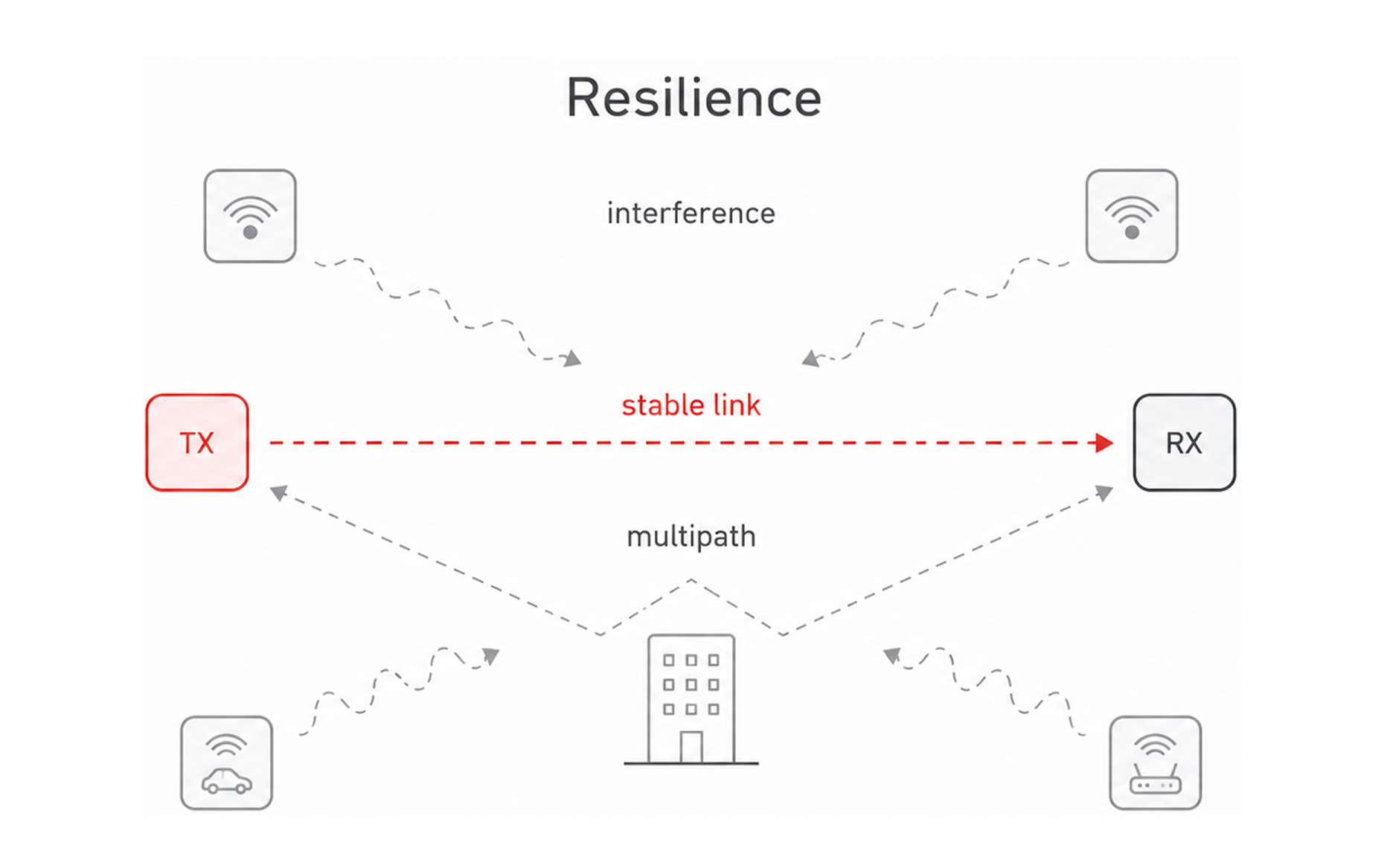
Real-world RF environments are constantly changing. Devices move, people and objects alter propagation paths, and reflections from surrounding surfaces continuously reshape the signal at the receiver. In wireless systems that depend heavily on carrier phase, these changes can translate into fading and inconsistent link behavior.
LE-UWB™ is architected for these conditions. Its impulse-radio receiver detects RF energy within defined timing windows rather than relying on carrier phase as the basis for data recovery. Reflected signal paths can therefore contribute useful received energy instead of creating the same multipath sensitivity associated with phase-dependent narrowband communication.
The result is strong resilience to multipath fading as the transmitter, receiver, and surrounding environment change—supporting more consistent short-range connectivity across reflective, mobile, and physically dynamic environments.
High Throughput
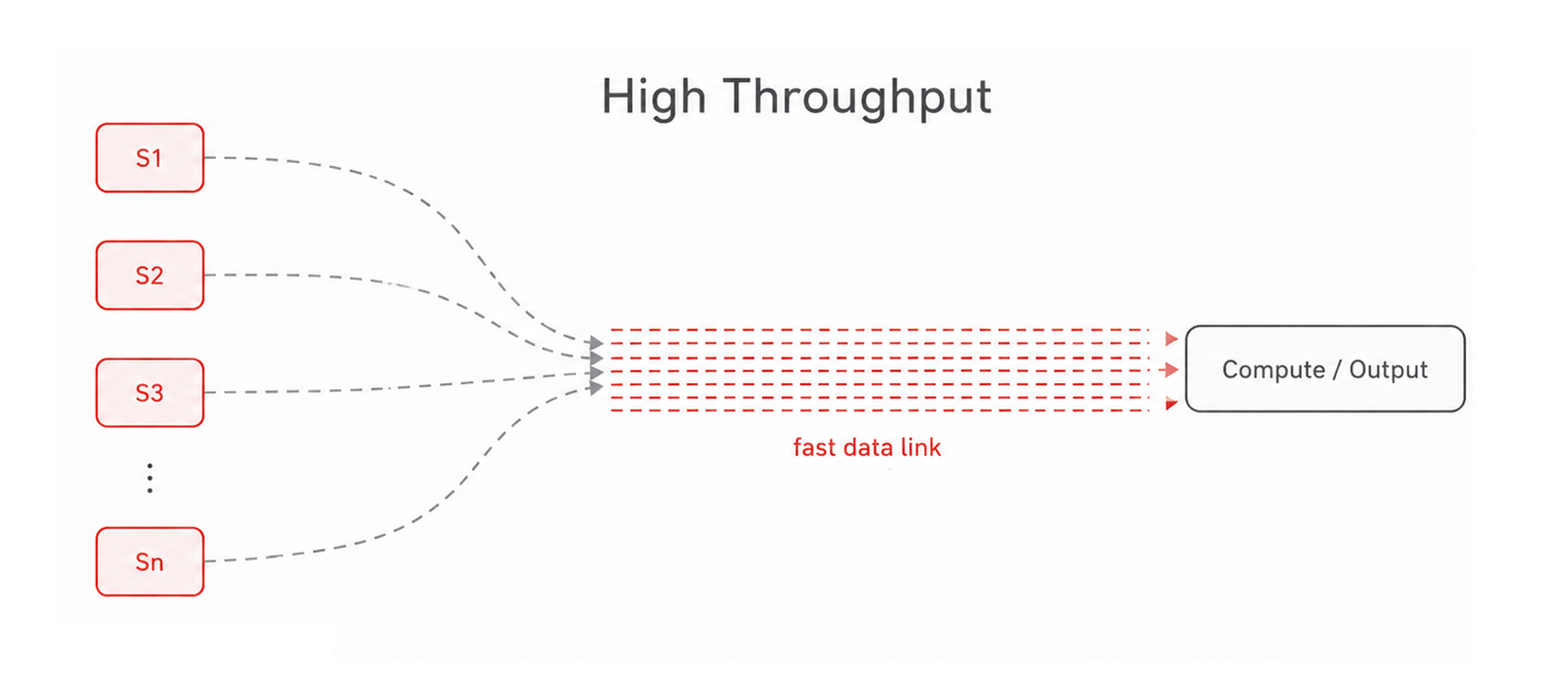
SPARK’s UWB technology uses very short impulses and takes advantage of UWB’s wide bandwidth and multiple channels. Together, these characteristics provide substantial spectral capacity for moving data quickly across short-range wireless links.
Because information is carried through extremely short pulses distributed across wide channels, LE-UWB™ can sustain high data rates while preserving the low-latency behavior of its impulse-radio architecture.
Its wideband operation also provides flexibility across the available spectrum, helping maintain performance in environments where other wireless systems are active.