Physical AI

Machines that perceive, decide, and act can no longer depend on remote processing. Intelligence is moving to the edge, where physical systems must respond in real time.

What Is Physical AI

Physical AI moves intelligence from remote servers into the machines that sense, decide, and act in the real world.

Unlike cloud-based AI, which can tolerate delays between request and response, Physical AI operates close to the event itself. When a robot adjusts its motion, an XR headset aligns digital content with a user’s movement, a surgical tool delivers haptic feedback, or a wearable responds to physiological signals, time-critical actions cannot depend exclusively on remote processing.

In these systems, perception, decision, and action form a continuous loop. Sensor data must reach the right processor. Inference results must coordinate with other devices. Commands must arrive within predictable timing windows. When that loop is delayed or disrupted, the impact is no longer just digital. It changes how physical systems behave.

SPARK Microsystems builds the deterministic wireless layer for Physical AI systems that need real-time intelligence, local coordination, and deterministic action at the edge.

The Edge is Ready. The Wireless Link is Missing.

Physical AI is becoming possible because the core technologies are now ready. Edge computing, advanced sensing, and real-time intelligence are converging, exposing the next critical bottleneck: the wireless link.

Edge Computing

Advances in AI model optimization and edge processing hardware are making it possible to run intelligence directly on devices. Decisions that once depended on centralized computing can now happen closer to the sensor, closer to the actuator, and closer to the event itself.

Advanced Sensing

Sensing technologies are becoming more compact, precise, and widely deployable. From cameras, LiDAR, and IMUs to force sensors, microphones, and biosensors, physical systems can now capture richer real-time information about their environment, their users, and their own motion.

Real-Time Intelligence

Physical AI depends on more than making decisions locally. It requires those decisions to become action within predictable timing windows. As motors, haptics, robotics components, and control systems become faster and more precise, machines can respond to real-world conditions with the speed and fidelity intelligent systems demand.
Applications

Physical AI Across Real-World Systems

Physical AI is emerging wherever intelligence must operate close to motion, perception, and human interaction.
These systems may look different, but they share the same architectural pattern: distributed sensing, on-device intelligence, real-time coordination, and physical response.

Intelligent Industrial Automation

Intelligent Industrial Automation

Robotic systems, inspection platforms, predictive maintenance tools, and process control equipment that sense industrial environments, process data at the edge, and coordinate real-time physical responses across factory floors, logistics centers, and automated production lines.

Human-Machine Interfaces

Precision Human-Machine Interfaces

Surgical robotics, assistive devices, prosthetics, haptic systems, and connected tools that use real-time sensing and feedback to help people and machines coordinate precise physical outcomes.

AI-Enabled Wearables

AI-Enabled Wearables

Next-generation wearables, hearables, health monitors, and personal devices where on-device intelligence enables real-time feedback, adaptation, and physical interaction.

Augmented Vision

Augmented Vision

AI glasses and vision-enabled interfaces that deliver contextual intelligence, real-time visual assistance, and hands-free digital interaction by connecting what users see, hear, and do with intelligent, location-aware responses.

Autonomous Systems

Autonomous Systems

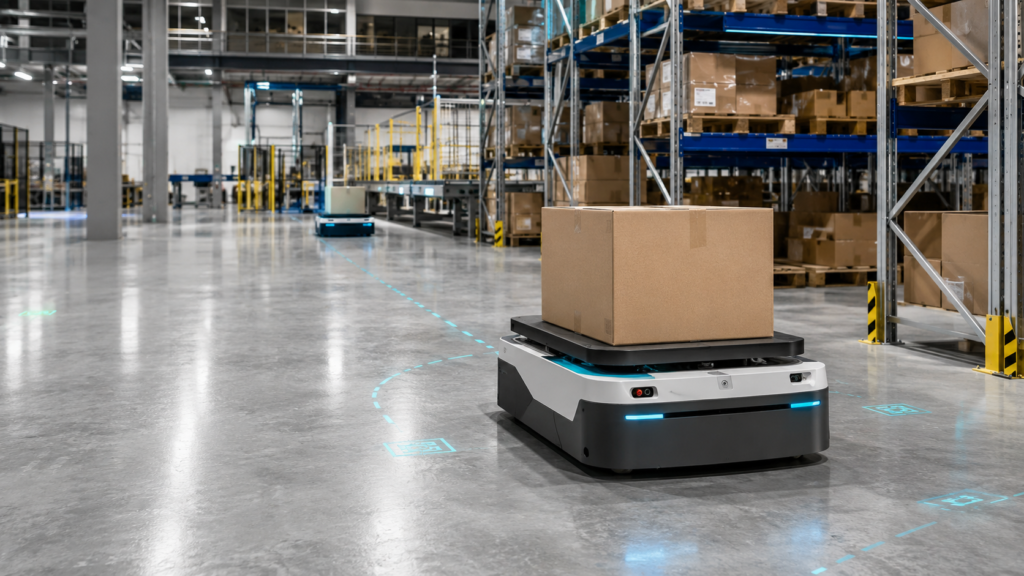
Mobile robots, inspection drones, delivery platforms, and warehouse automation systems that perceive their surroundings, coordinate movement, and act without continuous human control.

Intelligent Industrial Automation

Robotic systems, inspection platforms, predictive maintenance tools, and process control equipment that sense industrial environments, process data at the edge, and coordinate real-time physical responses across factory floors, logistics centers, and automated production lines.

Precision Human-Machine Interfaces

Surgical robotics, assistive devices, prosthetics, haptic systems, and connected tools that use real-time sensing and feedback to help people and machines coordinate precise physical outcomes.

AI-Enabled Wearables

Next-generation wearables, hearables, health monitors, and personal devices where on-device intelligence enables real-time feedback, adaptation, and physical interaction.

Augmented Vision

AI glasses and vision-enabled interfaces that deliver contextual intelligence, real-time visual assistance, and hands-free digital interaction by connecting what users see, hear, and do with intelligent, location-aware responses.

Autonomous Systems

Mobile robots, inspection drones, delivery platforms, and warehouse automation systems that perceive their surroundings, coordinate movement, and act without continuous human control.

Wireless Requirements for Physical AI
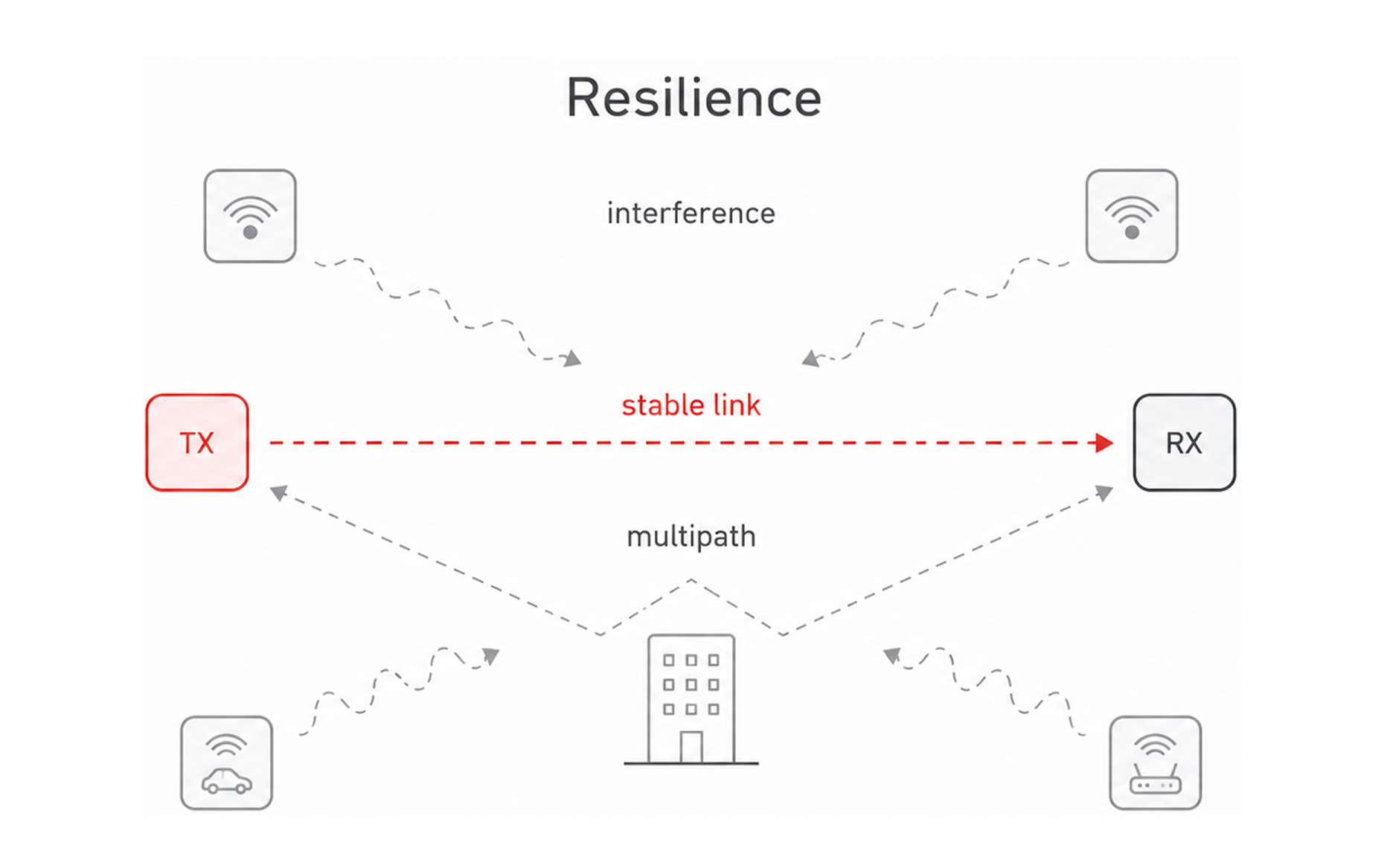
In Physical AI systems, wireless connectivity is no longer just a feature. It becomes part of the control loop. To sense, decide, coordinate, and act in real time, these systems depend on four critical wireless performance requirements:
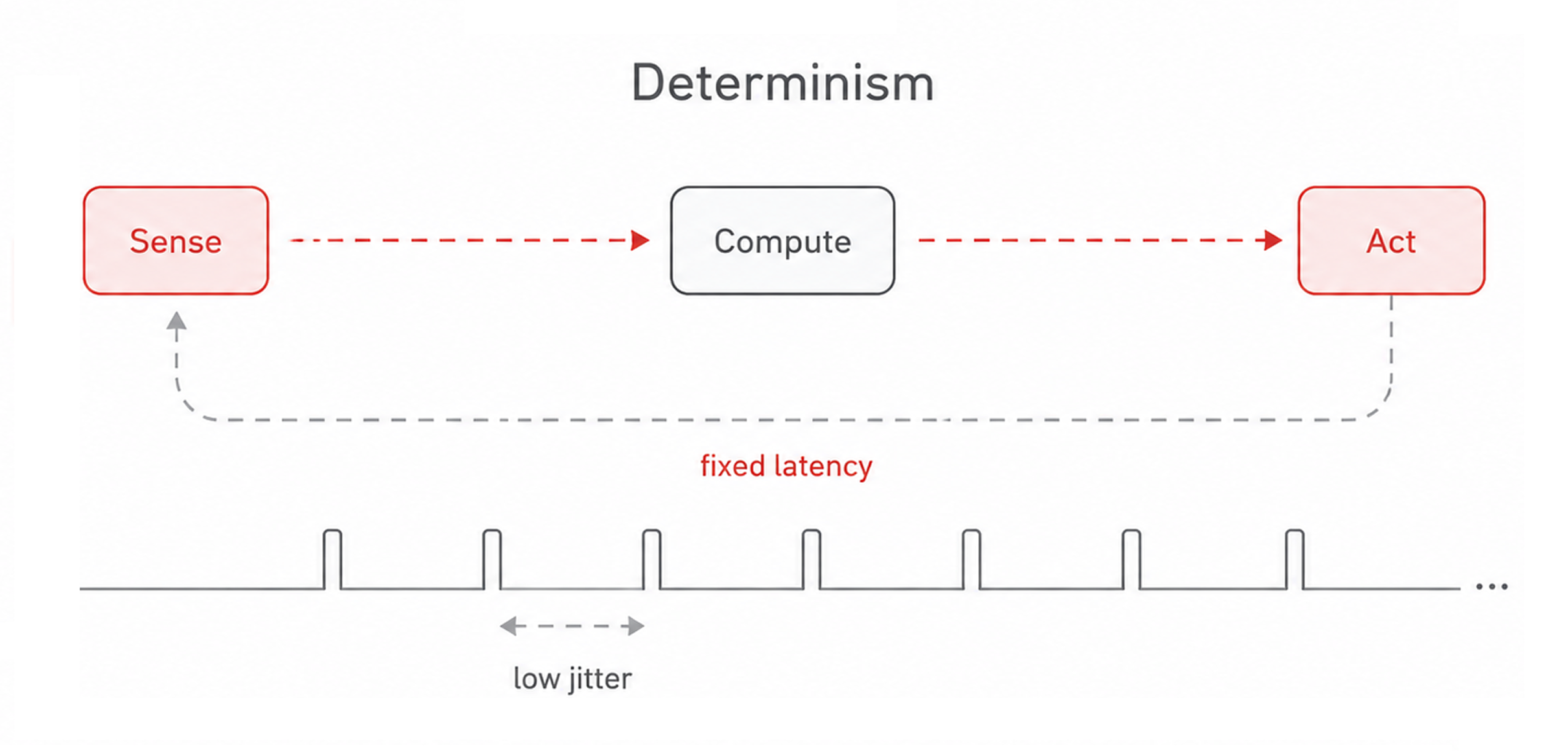
Ultra-low latency and minimal jitter enable predictable timing from sensing to action, keeping distributed devices synchronized and allowing Physical AI systems to respond within defined control-loop windows.
Robust wireless performance maintains reliable operation in complex RF environments, helping systems remain predictable despite interference, congestion, multipath, and multi-device coexistence.
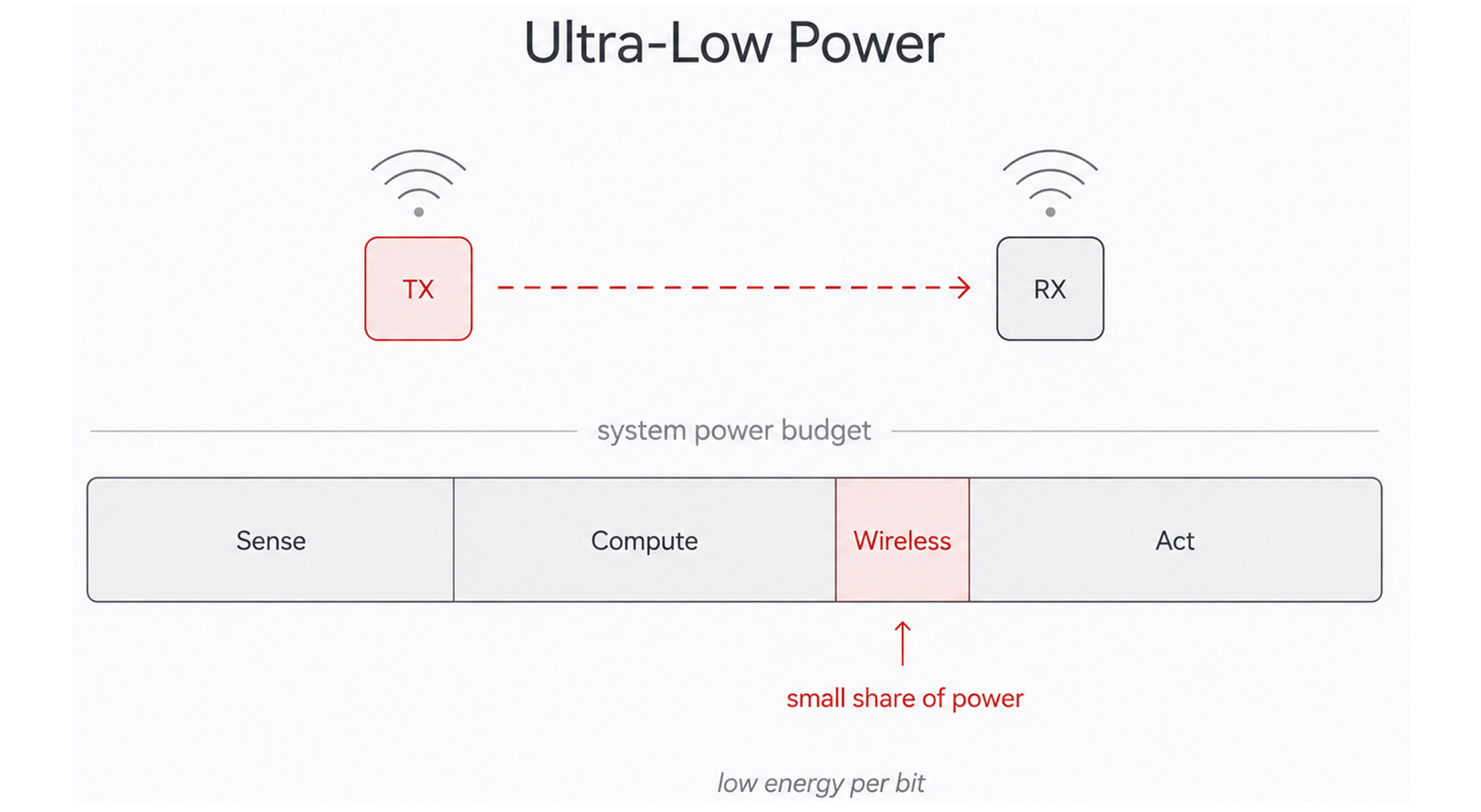
Highly efficient wireless operation extends battery life, reduces heat, and enables smaller, denser, and more mobile Physical AI deployments without compromising real-time performance.
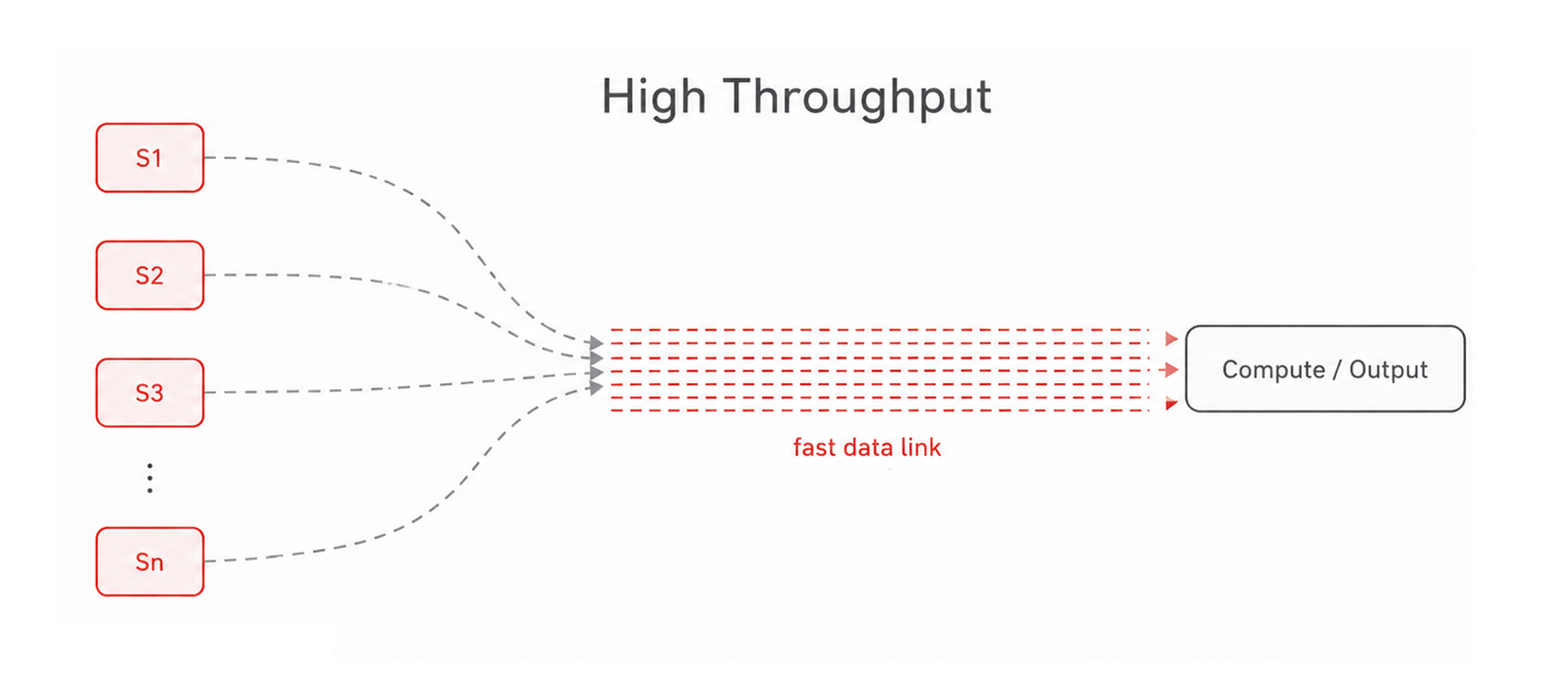
High-speed data transfer keeps rich sensor streams, inference outputs, and coordination signals moving in real time, enabling faster perception, smoother feedback, and more responsive physical action.
Hard bounds, every cycle

Deterministic Timing

Physical AI systems depend on closed-loop operation, where sensor data, inference outputs, coordination signals, and actuation commands must arrive within defined timing windows. The wireless link must deliver predictable latency and repeatable behavior cycle after cycle, enabling distributed devices to stay synchronized and respond in real time.
Real-world environments

Interference-Resilient Connectivity

Physical AI operates in complex RF environments such as factories, hospitals, logistics centers, homes, and dense multi-device systems. The wireless link must remain predictable despite interference, congestion, multipath, and coexistence challenges, maintaining reliable operation under real deployment conditions.
Battery life at scale

Ultra-Low power

Physical AI often runs in mobile, wearable, handheld, embedded, or high-density deployments where size, heat, and battery life are system-level constraints. The wireless link must move data efficiently without dominating the power budget, while preserving the timing performance required for real-time operation at the edge.
Full sensor pipelines

High Data Throughput

Physical AI requires more than simple status messaging. Distributed perception, sensor fusion, coordination, and feedback loops may depend on continuous data from cameras, IMUs, microphones, force sensors, biosensors, and control systems, requiring enough wireless throughput to keep intelligence moving fast enough to act.
Ultra-low latency and minimal jitter enable predictable timing from sensing to action, keeping distributed devices synchronized and allowing Physical AI systems to respond within defined control-loop windows.
Hard bounds, every cycle

Deterministic Timing

In a closed-loop physical system, data must arrive within a defined timing window, not just quickly on average. Sensor inputs, inference outputs, coordination signals, and actuation commands all have deadlines. Predictable timing keeps distributed devices synchronized and enables real-time physical response.
Robust wireless performance maintains reliable operation in complex RF environments, helping systems remain predictable despite interference, congestion, multipath, and multi-device coexistence.
Real-world environments

Interference-Resilient Connectivity

Physical AI operates in complex RF environments: factories, hospitals, logistics centers, homes, public spaces, and dense multi-device systems. Interference, congestion, multipath, and coexistence cannot make the link unpredictable. Reliability is not just staying connected — it is predictable operation under real deployment conditions.
Highly efficient wireless operation extends battery life, reduces heat, and enables smaller, denser, and more mobile Physical AI deployments without compromising real-time performance.
Battery life at scale

Ultra-Low power

In a closed-loop physical system, data must arrive within a defined timing window, not just quickly on average. Sensor inputs, inference outputs, coordination signals, and actuation commands all have deadlines. Predictable timing keeps distributed devices synchronized and enables real-time physical response.
High-speed data transfer keeps rich sensor streams, inference outputs, and coordination signals moving in real time, enabling faster perception, smoother feedback, and more responsive physical action.
Full sensor pipelines

High Data Throughput

Physical AI depends on more than simple status messages. Sensor fusion may involve cameras, IMUs, microphones, force sensors, biosensors, and control data moving between distributed components. The wireless link must provide enough throughput to keep perception pipelines, coordination layers, and feedback loops moving in real time.
Documents

Demander la documentation

Documents

Download