LE-UWBTM Technology
High-performance wireless technology for real-time intelligent systems.

What is LE-UWB™?
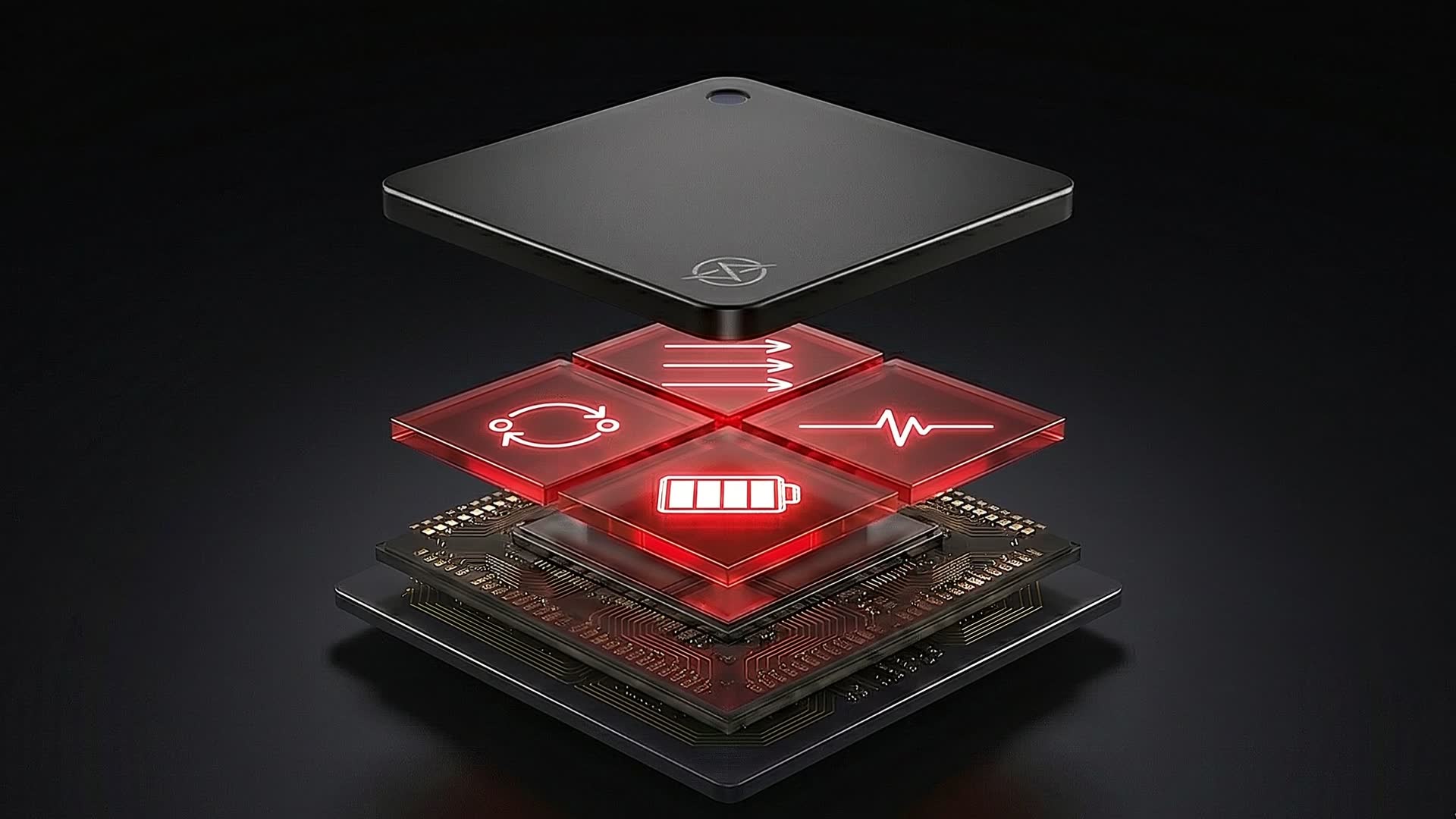
Where conventional UWB implementations are typically optimized for ranging and positioning, LE-UWB™ is designed as a high-performance data link. It gives time-critical systems a wireless connection with the timing precision, responsiveness, and energy efficiency required to sense, coordinate, and act at the edge.
How LE-UWB™ Works
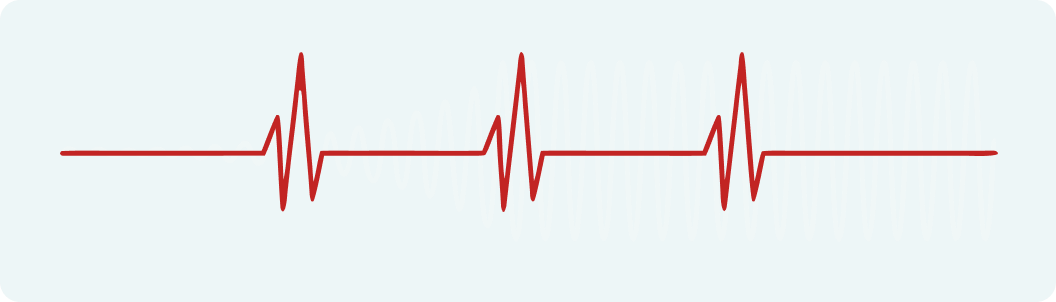
Carrier modulation
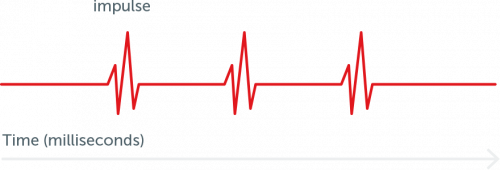
Immediate transmission

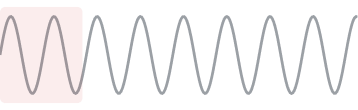
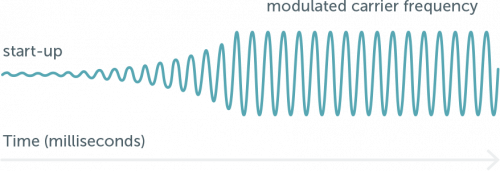
Most familiar wireless technologies—including Bluetooth, Wi-Fi, Zigbee, and cellular—use narrowband architectures. They transmit data by modulating a carrier frequency: a continuous reference signal that the transmitter and receiver must establish and maintain for communication to take place.
This architecture introduces inherent constraints, including carrier-acquisition time, modulation-rate limitations, and continuous phase tracking that can make the receiver more sensitive to interference, reflections, and movement.
LE-UWB™ takes a fundamentally different approach: impulse radio. Rather than modulating a continuous carrier, it transmits data using discrete, ultra-short pulses, each lasting 5 nanoseconds or less. With no carrier to acquire, there is no carrier-lock initialization delay and no continuous phase-tracking requirement, allowing communication to begin with minimal startup overhead.
Impulse radio is not a new concept. The earliest radio systems used spark-gap transmitters to generate short electromagnetic impulses. LE-UWB™ applies that same fundamental principle through modern precision engineering and SPARK’s proprietary power optimization.
Ultra-Wideband by Design
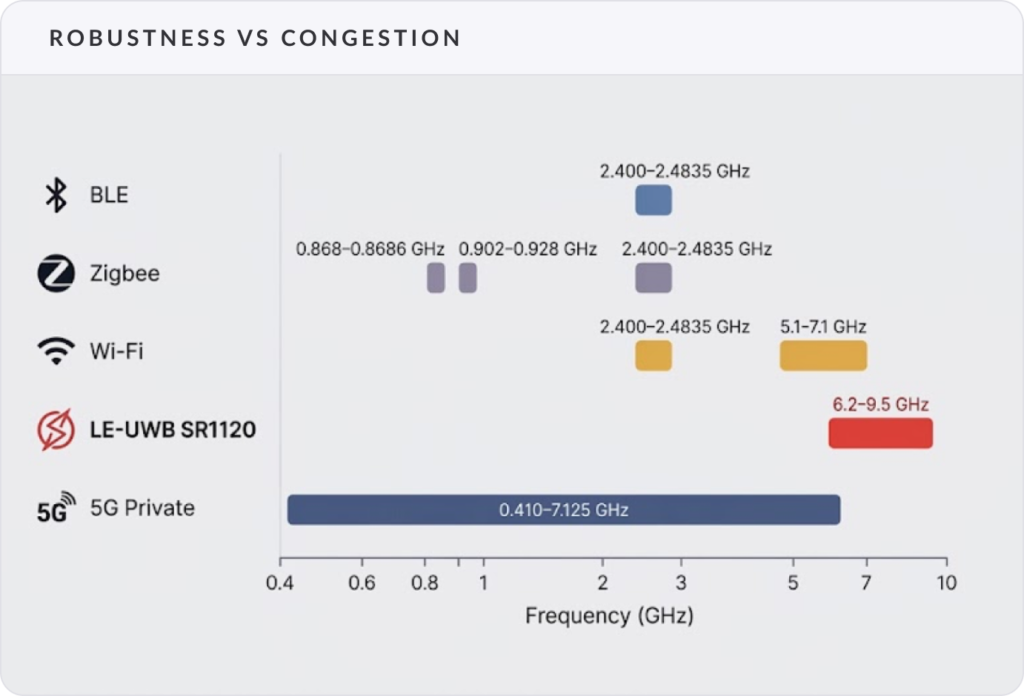
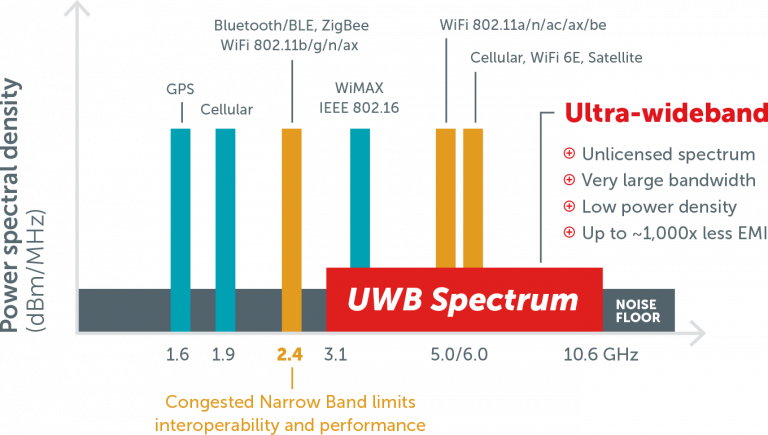
UWB operates across a broad portion of spectrum, typically from 3.1 to 10.6 GHz*, with channel bandwidths of 500 MHz or more. By spreading very low spectral output power across a wide frequency range, UWB can coexist with other wireless standards operating in the same physical environment. To other radio systems, the UWB signal can appear as background noise.
Combined with impulse-radio transmission, this wide bandwidth and access to multiple channels contribute to UWB’s low latency, high data rates, and strong robustness against multipath effects.
*Availability across the 3.1–10.6 GHz range is subject to applicable regional UWB regulations.
Carrier modulation
Immediate transmission
The SPARK Difference
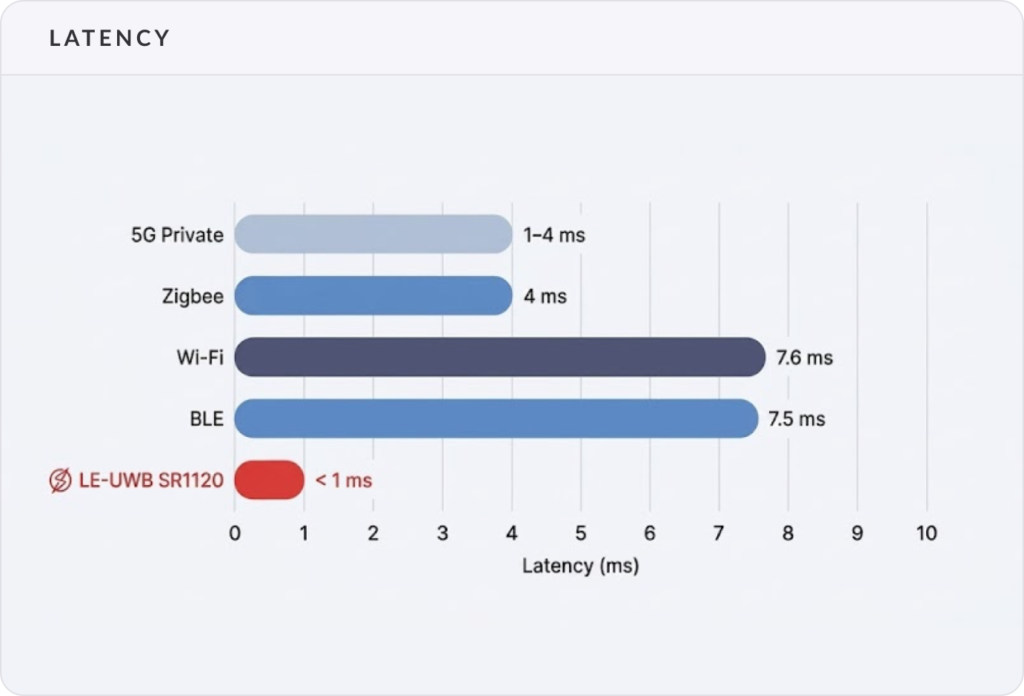
Ultra-Low Latency
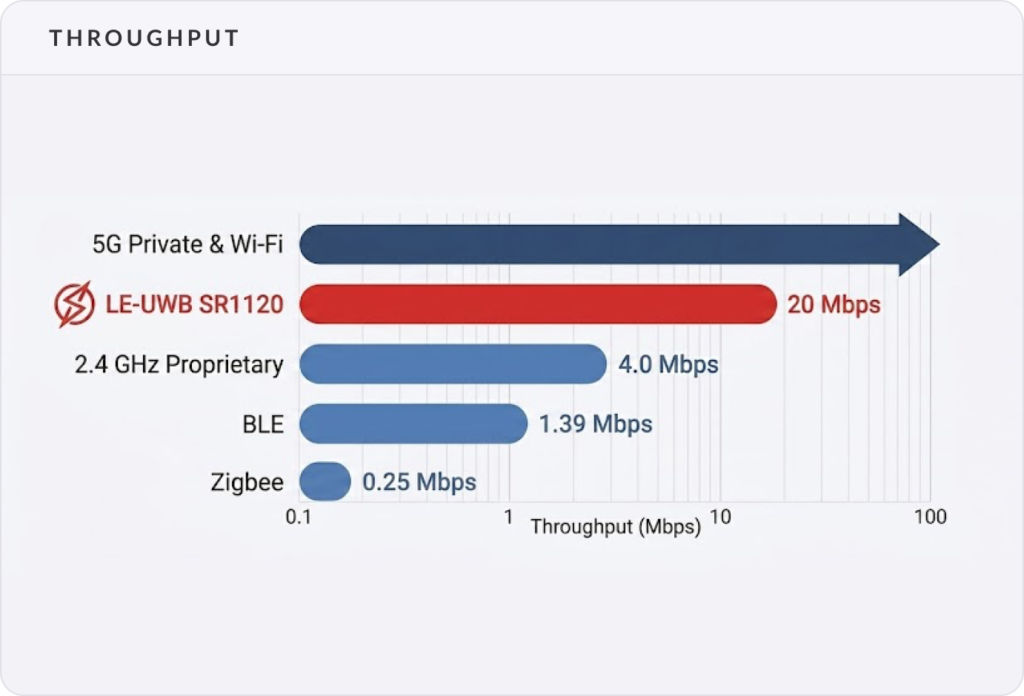
High Data Rate
Robust Connectivity
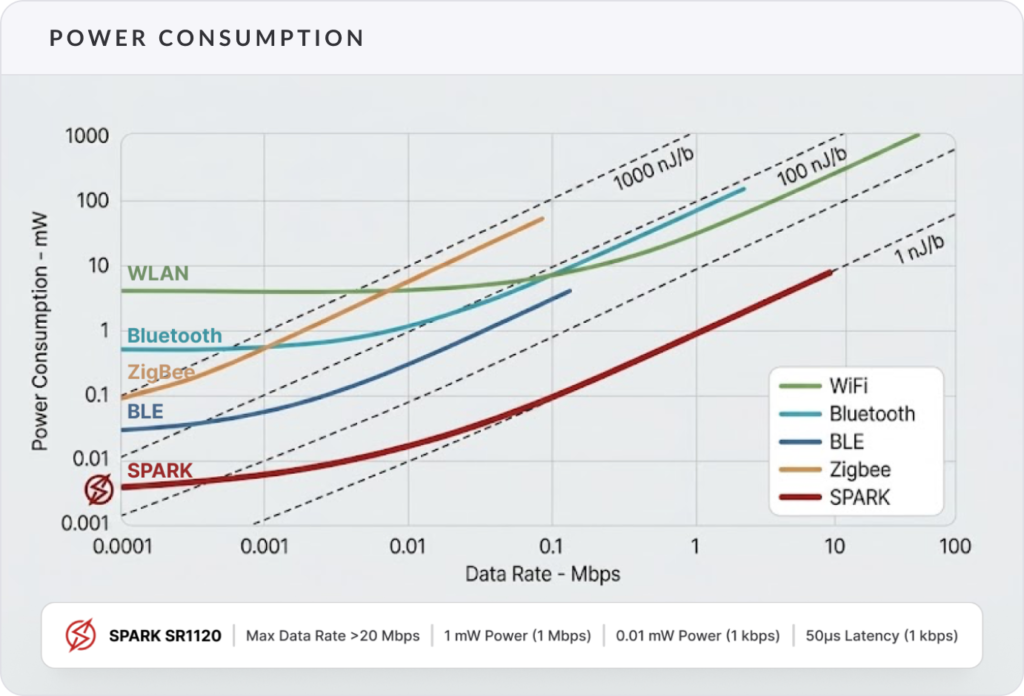
Ultra-Low Power
Multipath Robustness & Coexistence
LE-UWB™ is architected differently. Its receiver detects RF energy within defined timing windows rather than depending on carrier phase for data recovery. As a result, reflected paths can contribute useful energy instead of producing the same fading behavior associated with phase-dependent reception. The result is strong resilience to multipath in dynamic, reflective environments.
Resilient in complex RF environments. Engineered to coexist.