LE-UWBTM Technology

The wireless architecture built for real-time intelligent systems.

What is LE-UWB?

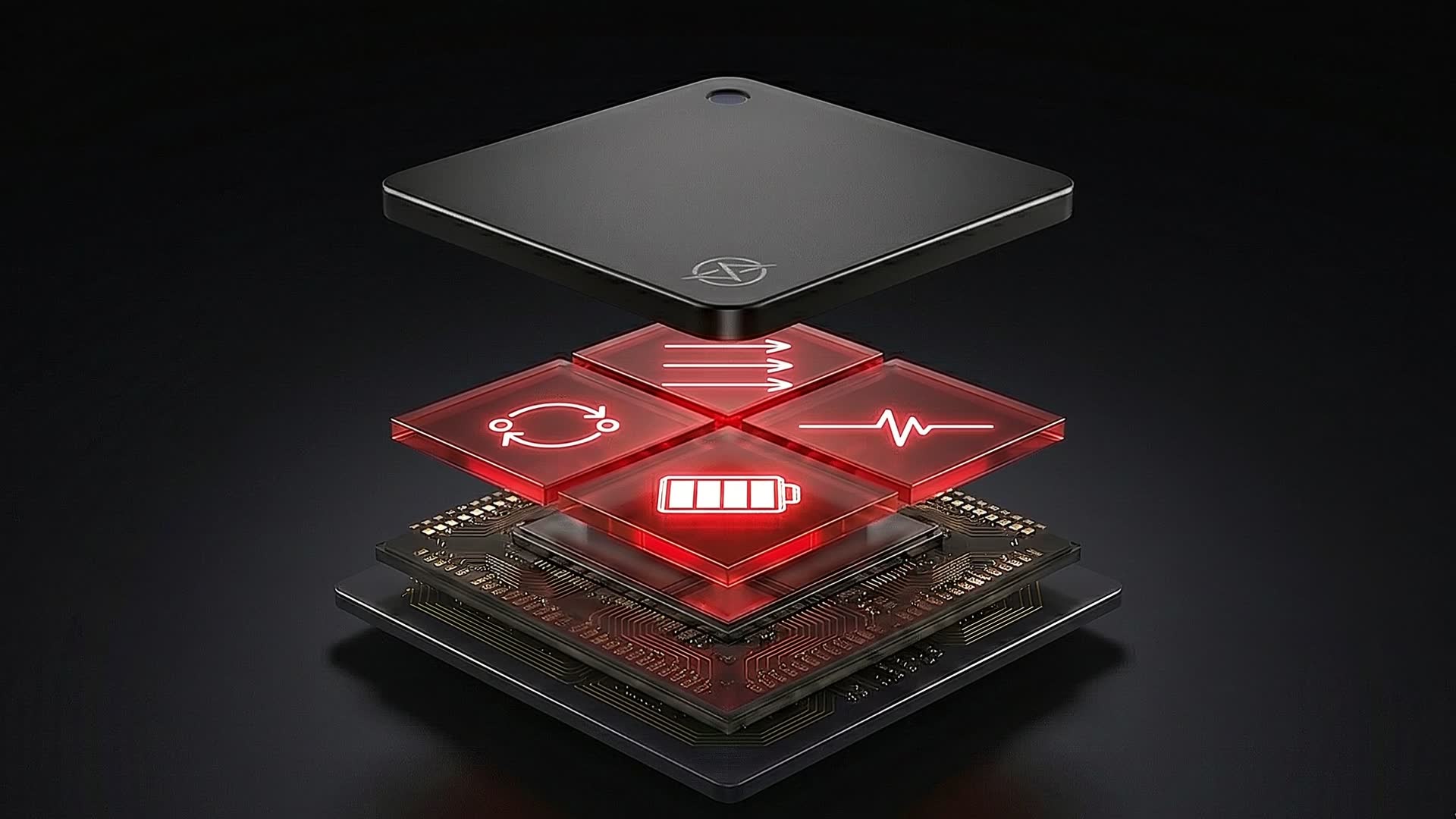
LE-UWB™ (Low Energy Ultra-Wideband) is SPARK Microsystems’ wireless technology architecture for deterministic, real-time data transfer at ultra-low power. Built on impulse-radio UWB principles and optimized for low-energy operation, LE-UWB is designed to deliver predictable latency, high throughput, and robust short-range connectivity for time-critical physical systems.

Unlike conventional standards-based UWB implementations, which are often associated with ranging and positioning, LE-UWB is engineered as a real-time wireless data link for systems that need to sense, coordinate, and act at the edge.
As low as
1 nJ
per bit
Up to
41
Mbps
Approx
25 μs
Airtime for 1 kbit
While conventional UWB is often optimized for ranging and location, LE-UWB™ is engineered for real-time wireless data transfer. It brings deterministic low latency, ultra-low power consumption, and high data throughput together in a single short-range wireless link.

LE-UWB is purpose-built for devices that cannot tolerate timing uncertainty, interference-driven dropouts, or power budgets that compromise size, heat, battery life, or deployment density.

How LE-UWB Works

Narrowband
Bluetooth · Wi-Fi · Zigbee :
Carrier modulation
Carrier lock
Data Transfer
LE-UWB
Impulse radio :
Immediate transmission
Immediate. No initialization
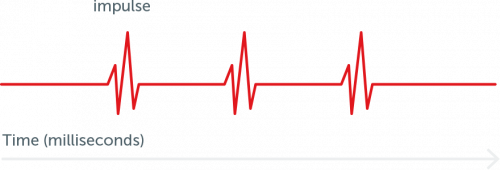
"LE-UWB transmits data as discrete ultra-short pulses, each 5 nanoseconds or less; rather than modulating a carrier frequency. There is no carrier to lock on to, no initialization delay, and no phase tracking requirement."
Impulse radio vs. narrowband

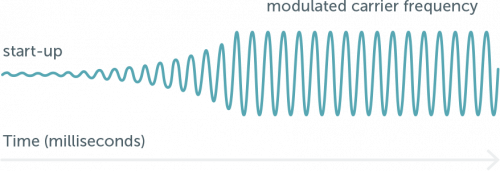
Most familiar wireless standards such as Bluetooth, Wi-Fi, Zigbee, cellular are narrowband technologies. They transmit data by modulating a carrier frequency: a continuous reference signal that both sides of the link must establish and maintain before data can flow.

This has consequences: initialization delay, constrained modulation rate, and continuous phase tracking that makes the receiver sensitive to interference, reflection, and movement.

LE-UWB uses a fundamentally different approach: impulse radio. Instead of a carrier, LE-UWB transmits data as discrete ultra-short pulses, each 5 nanoseconds or less. There is no carrier to lock on to, no initialization delay, and no phase tracking requirement. A link can start transmitting immediately.

This is not a new idea. The earliest radio transmissions used spark-gap impulse transmitters. LE-UWB applies the same physical principle with precision engineering and proprietary power optimization built on top.

UWB Spectrum

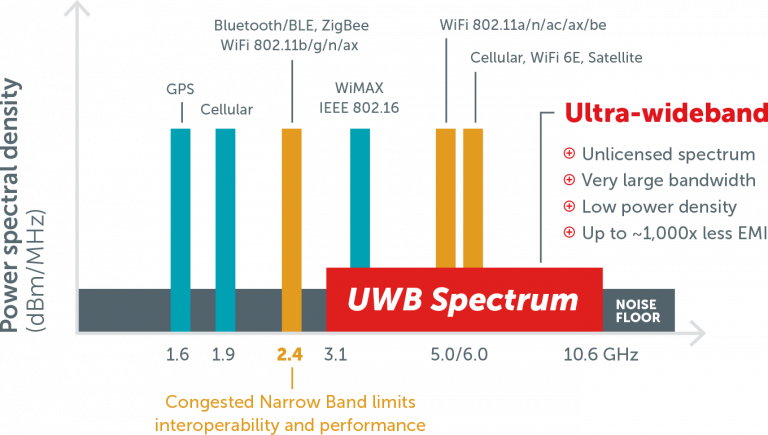
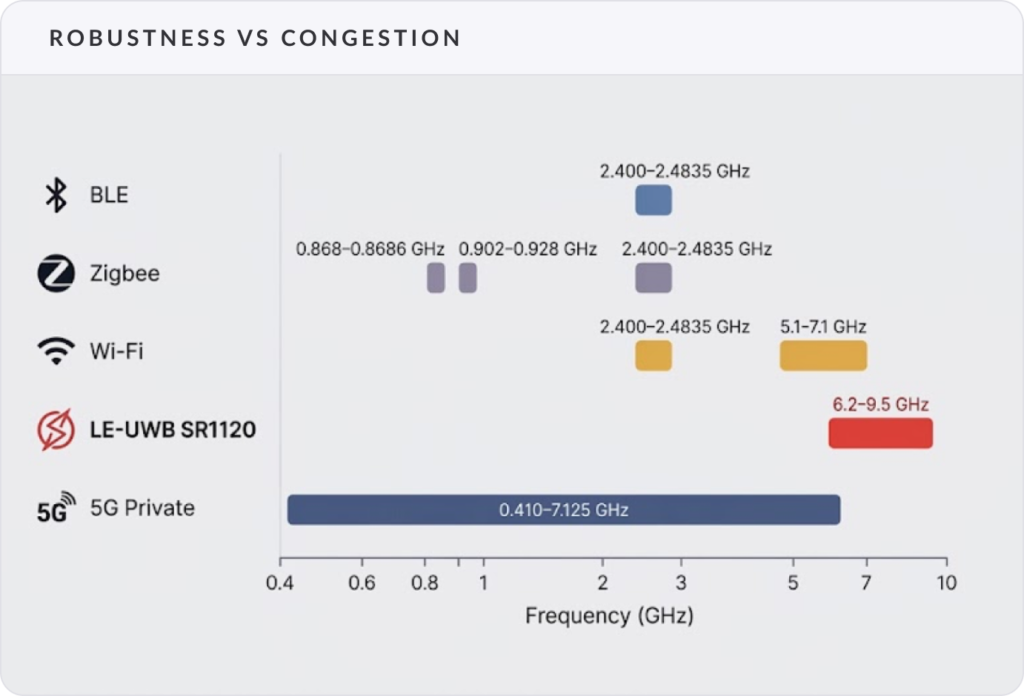
Unlike narrowband radios that squeeze a signal into a thin slice of spectrum, LE-UWB spreads its energy across a wide portion of it. The SR1120 operates in the 6.2–9.5 GHz band, divided into several wide channels the radio can be tuned across. That wide occupied bandwidth is what gives ultra-wideband its defining properties: fine timing resolution, strong resistance to multipath, and room for high data rates.

The spectrum is dynamically reconfigurable, so the SR1120 can select channels to suit regional UWB regulations rather than being locked to a single fixed allocation. Combined with antenna diversity and configurable symbol rates up to 40.96 MHz, this lets one device operate across regions and coexist with BLE, Wi-Fi, and cellular instead of contending for the crowded 2.4 and 5 GHz bands.

Narrowband
Bluetooth · Wi-Fi · Zigbee :
Carrier modulation
Carrier lock
Data Transfer
LE-UWB
Impulse radio :
Immediate transmission
Immediate. No initialization
"LE-UWB transmits data as discrete ultra-short pulses, each 5 nanoseconds or less; rather than modulating a carrier frequency. There is no carrier to lock on to, no initialization delay, and no phase tracking requirement."
Context

Short-range wireless has a different problem.

Narrowband technologies were designed for range. LE-UWB was designed for proximity such as, Personal Area Networks, Body Area Networks, and near-field device-to-device links where tight power budgets, dense RF environments, and deterministic timing requirements demand a different architecture.
Narrow band radio
Traditional Wireless
• Higher transmit power
• Slow startup / initialization
• Poor ranging
• High latency
• Poor multipath robustness
Performance

The four proof pillars.

LE-UWB™ delivers across four critical pillars for intelligent physical systems. Each is grounded in measurable wireless performance, not abstract connectivity claims.

Ultra-Low Latency

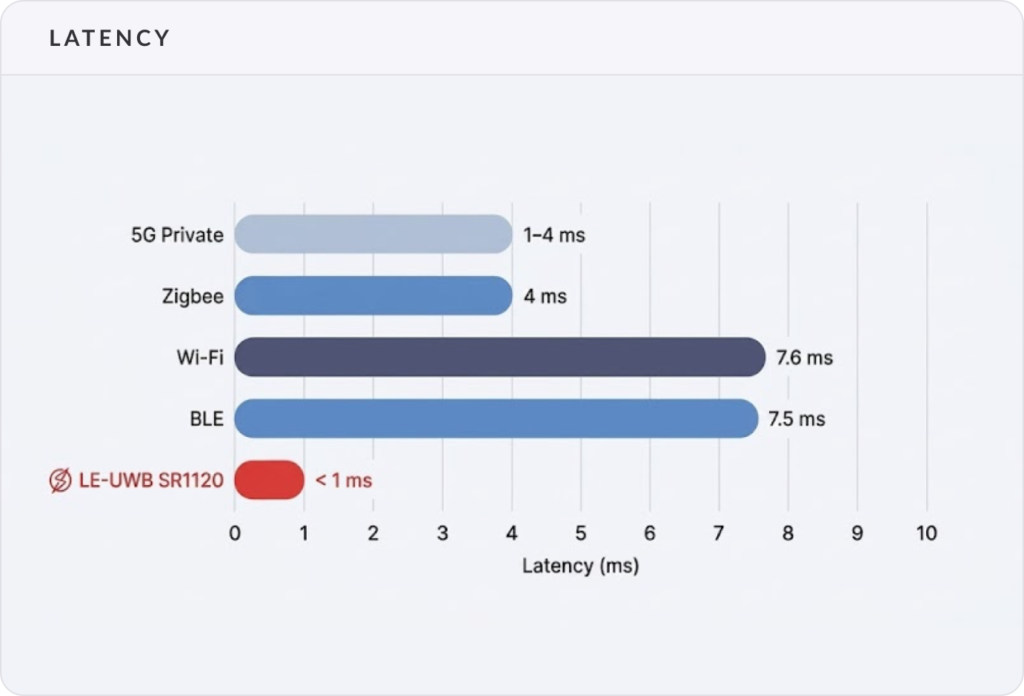
Impulse radio requires no carrier establishment and no phase lock. Data transmission begins immediately. End-to-end latency is deterministic. The same, every time, with no jitter introduced by congestion, retries, or protocol overhead.
25 µs
airtime for 1 kbit

High Throughput

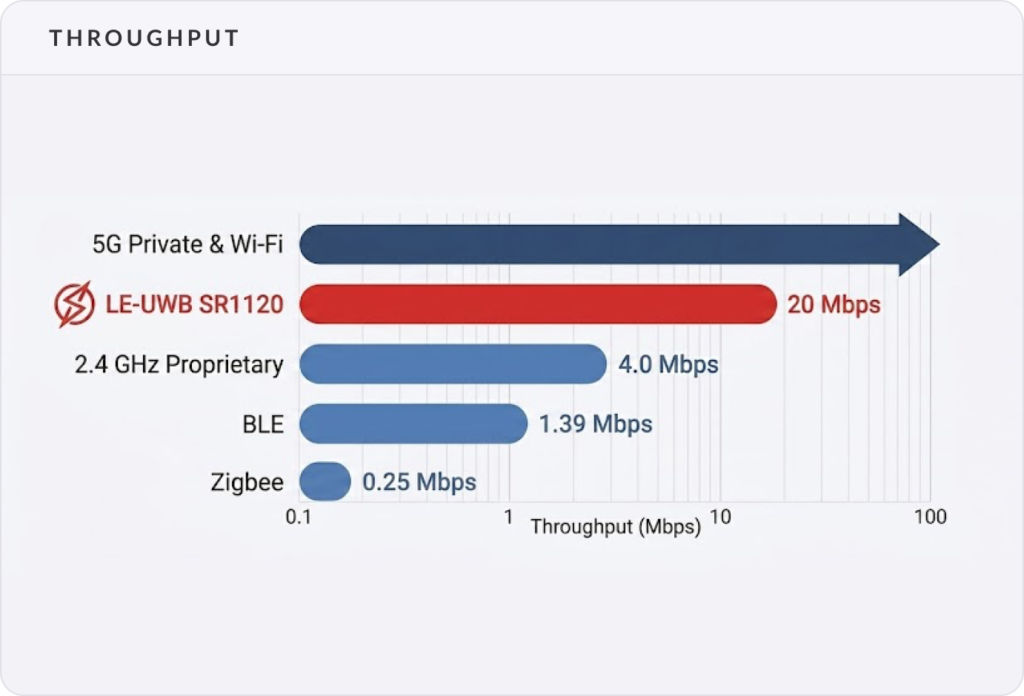
LE-UWB combines ultra-short pulses with wide bandwidth and multiple channels to deliver high data rates over short range, exceeding BLE, Zigbee, and comparable PAN technologies at equivalent power levels.
40.96 Mbps
peak data rate

Robust Connectivity

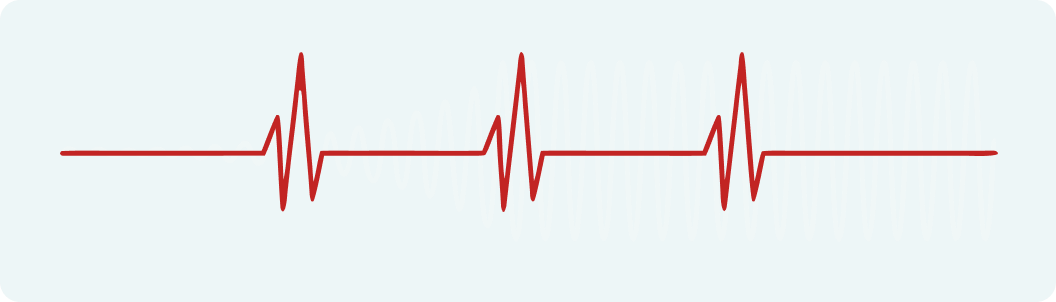
LE-UWB's impulse architecture does not rely on phase to decode data. The receiver looks for the presence or absence of RF energy within a defined time window. Multipath reflections add energy rather than corrupting it; robust to movement of device, transmitter, or environment.
Highly resistent
to multipath fading

Ultra-Low Power

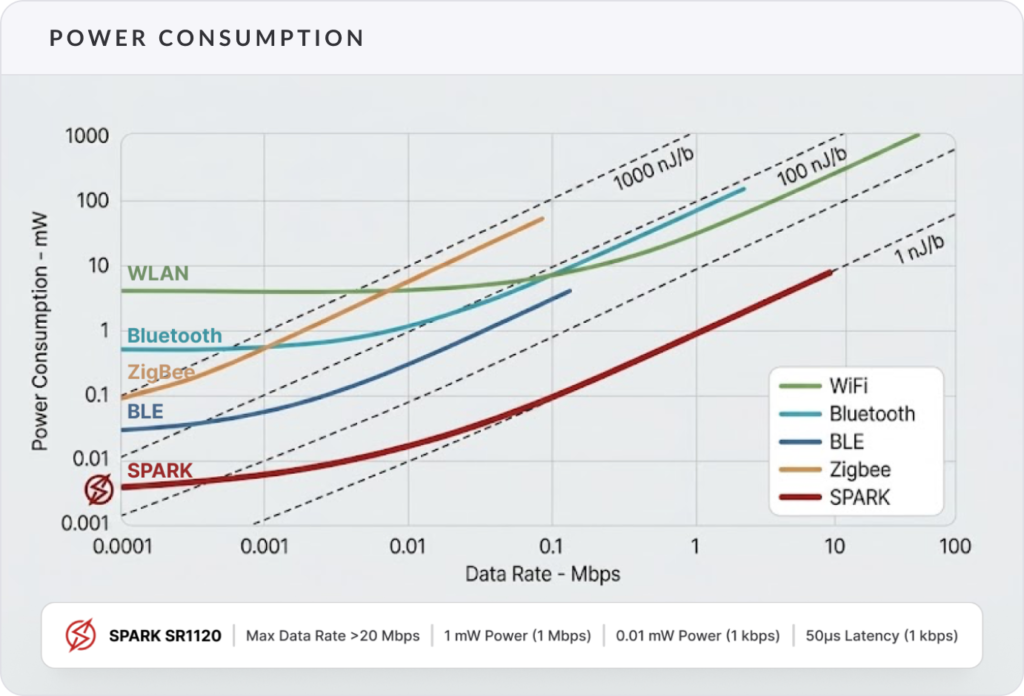
LE-UWB transmits in short bursts at very low spectral power. SPARK's proprietary architecture reduces power consumption up to 40× compared to BLE, enabling energy-harvesting configurations and dramatically extended battery life in constrained devices.
1mW
@1 Mbps
Robustness

Multipath & coexistence

All wireless links encounter multipath: the receiver sees not just the direct signal, but reflections from walls, floors, objects, and moving elements in the environment. Narrowband receivers, which depend on phase tracking, are vulnerable to the phase shifts these reflections introduce.

LE-UWB's impulse architecture is inherently immune to this failure mode. Because decoding does not depend on phase, multipath reflections add energy to the received signal rather than distorting it. Movement of the device, the transmitter, or objects in the environment does not degrade link quality.
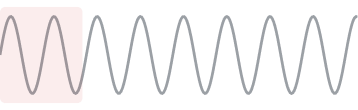
Waveform Comparison
Traditional Narrow Band Radio
SPARK LE-UWB
Coexistence follows from the same spectral design: LE-UWB's very low power density means BLE, Wi-Fi, and cellular standards register it as background noise. No spectrum competition. No interference.
Ranging

100× more precise than RSSI

Because LE-UWB pulses are extremely short and their edges sharp, time of flight between transmitter and receiver can be measured with high precision. Distance can be determined at accuracy levels 100× greater than RSSI-based methods used by narrowband systems.
RX
Time of Flight
100×
vs. RSSI ranging accuracy
+/-30 cm LoS
ToF precision
Security

Inherently difficult to intercept

LE-UWB's low spectral output power makes passive eavesdropping inherently difficult and a third party must be in close physical proximity to intercept a signal. The same characteristic makes man-in-the-middle attacks significantly harder to execute.
Passive eavesdropping
Requires close physical proximity that is far below practical intercept range for most attack vectors.
Man-in-the-middle
Extremely low power density makes relay attacks significantly harder to execute undetected.
LE-UWB vs. BLE · Wi-Fi · Standard UWB

How LE-UWB Compares

Performance claims require evidence. The benchmark table sets LE-UWB side-by-side against BLE, Wi-Fi, and standard 802.15.4z UWB across latency, power draw, throughput, and range; with test conditions stated.

What's next

Ready to go deeper?

Documents

Demander la documentation

Documents

Download