
Technologie sans fil haute performance pour les objets connectés de nouvelle génération
La nouvelle génération d'objets connectés repousse les limites des technologies sans fil conventionnelles. Une détection plus poussée, un échange de données continu et une expérience utilisateur plus réactive exigent une liaison sans fil capable d'offrir un débit élevé, une latence ultra-faible et une consommation d'énergie exceptionnellement basse, sans compromis entre performances et autonomie.

LÀ OÙ LES RÉSEAU SANS FIL ACTUELS MONTRENT INSUFFISANTS
Pourquoi la technologie sans fil actuelle freine le développement des objets connectés
Les technologies sans fil classiques ont été conçues selon des priorités de performance distinctes, plutôt que pour répondre aux exigences combinées des dispositifs portables de nouvelle génération. À mesure que les capacités des appareils augmentent, ces compromis architecturaux deviennent de plus en plus visibles en termes de capacité de données, de réactivité, de consommation d'énergie et de complexité globale du système.
Bluetooth Low Energy (BLE)
Le Bluetooth Low Energy (BLE) a été conçu pour des charges de travail de données faibles à modérées. Avec l'évolution des objets connectés de nouvelle génération vers une détection continue, des flux de données plus riches et une interaction en temps réel, leurs performances dépassent désormais celles pour lesquelles le BLE a été initialement optimisé. Si les nouvelles générations continuent d'améliorer le débit, le transfert de données soutenu et la réduction de la latence nécessitent toujours une activité radio accrue, préservant ainsi le compromis fondamental entre performances et consommation énergétique ultra-faible exigée par les objets connectés.
Wi-Fi
Le Wi-Fi a été conçu pour offrir un débit élevé et une large connectivité réseau. Cependant, pour les objets connectés de nouvelle génération, le maintien de performances Wi-Fi soutenues engendre une consommation d'énergie et une surcharge système importantes, entrant en concurrence avec le traitement, la détection, l'affichage et l'audio pour un budget limité. Malgré des améliorations constantes en termes d'efficacité, le compromis fondamental entre performances de données soutenues et consommation d'énergie ultra-faible requise par les objets connectés demeure.
SPARK Microsystems offre bien plus qu'une simple radio. Elle fournit la couche sans fil qui permet une détection plus riche, une intelligence en temps réel et des expériences réactives dans les objets connectés alimentés par l'IA, le tout dans les mêmes limites physiques, thermiques et énergétiques.
Applications
Permettre la prochaine génération d'expériences portables
Dans l’ensemble des applications portables, SPARK LE-UWB™ offre aux concepteurs la flexibilité nécessaire pour adapter les performances sans fil aux exigences propres à chaque produit en matière de détection, de réactivité, de facteur de forme et d’autonomie. Une seule plateforme silicium configurable prend en charge différents profils de fonctionnement, sans nécessiter de refonte de l’architecture sans fil sous-jacente.
Lunettes IA
Les lunettes IA nécessitent une coordination continue entre les microphones, les caméras, les capteurs et les unités de calcul environnantes. La technologie SPARK LE-UWB™ assure la liaison à faible latence et écoénergétique nécessaire au transfert de données au sein de l'écosystème des objets connectés, tout en préservant l'autonomie de la batterie pour la détection, le traitement et l'intelligence embarquée.
Appareils AR/VR
Les appareils de réalité augmentée et de réalité virtuelle nécessitent une coordination précise entre l'audio, le suivi des mouvements, les manettes et les accessoires connectés. La technologie SPARK LE-UWB™ assure une synchronisation précise et une latence ultra-faible pour des interactions fluides, réactives et cohérentes au sein de l'écosystème d'appareils.
Vêtements pour une expérience immersive
Les dispositifs portables immersifs transforment les spectateurs en participants actifs. SPARK LE-UWB™ permet des interactions lumineuses, haptiques et de proximité parfaitement synchronisées entre de grands groupes d'appareils, permettant à chaque expérience de réagir instantanément aux mouvements, à la position et aux signaux programmés.
Évaluer SPARK LE-UWB™
Le kit d'évaluation SR1120 offre aux équipes d'ingénierie des dispositifs portables une plateforme complète pour découvrir la technologie SPARK LE-UWB™ et évaluer ses performances au sein de leur propre architecture produit. Combinant l'émetteur-récepteur SR1120 avec le kit de développement logiciel (SDK) de SPARK, l'interface de liaison de données et des exemples de micrologiciels d'application, ce kit permet de passer directement de l'évaluation initiale à une preuve de concept sans fil entièrement caractérisée.
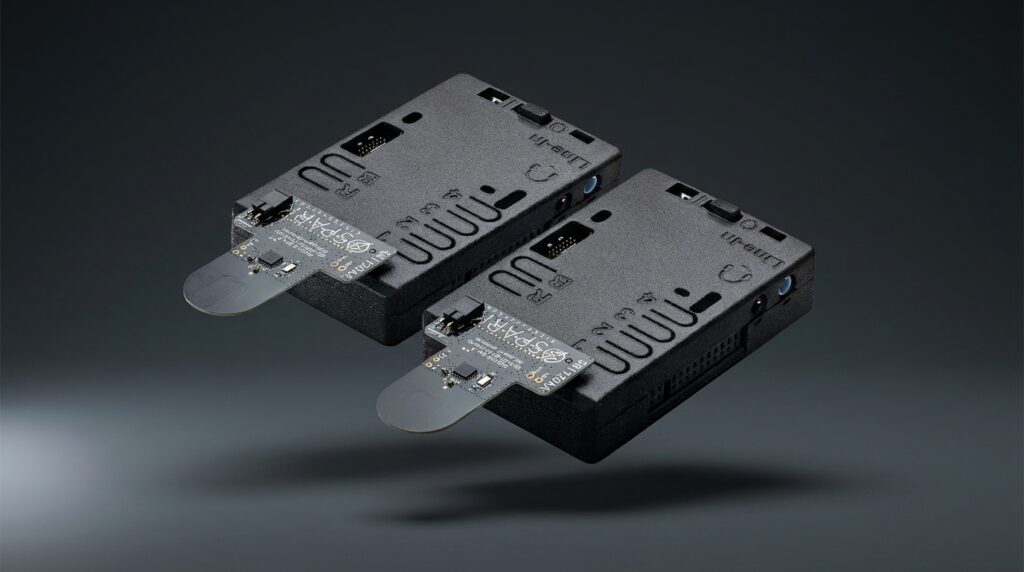
Produits
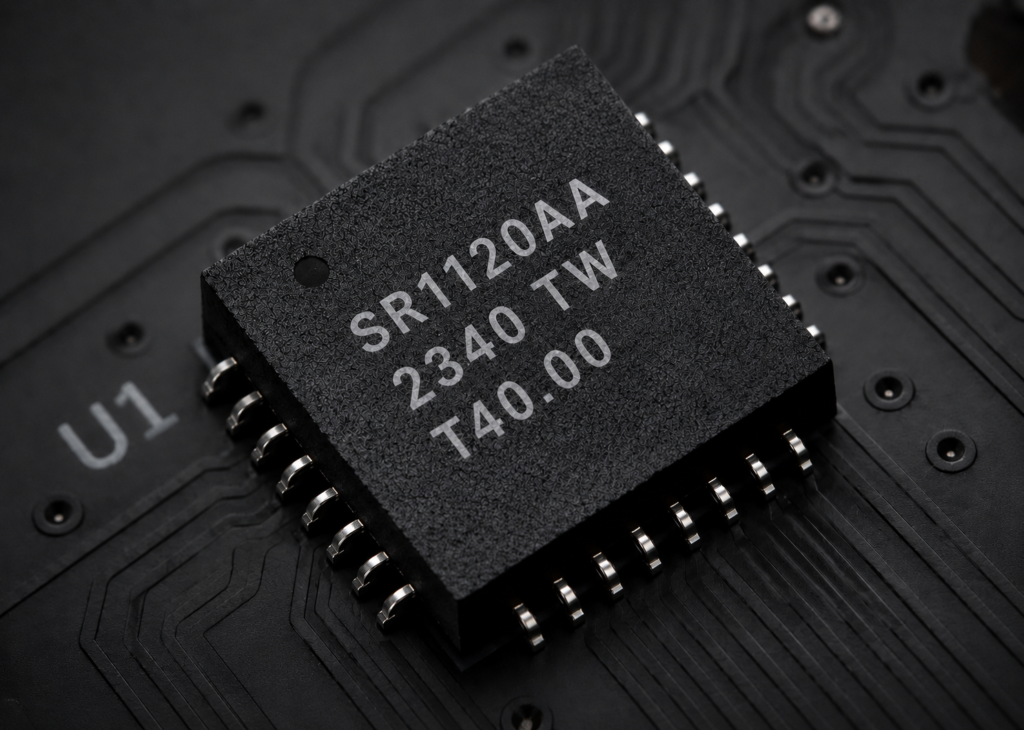
Émetteur-récepteur SR1120, LE-UWB™.
Sa couche physique configurable, sa mise à l'échelle PHY dynamique et sa prise en charge de la diversité d'antennes offrent aux concepteurs de systèmes la flexibilité nécessaire pour optimiser leur liaison sans fil en fonction des contraintes spécifiques de leur appareil, sans avoir besoin de changer le silicium à mesure que les exigences évoluent.